As schools nationwide implement smartphone bans, students are stepping up to shape policies, advocate for digital wellness education, and create tech-free environments, highlighting the need for solutions beyond simple restrictions.
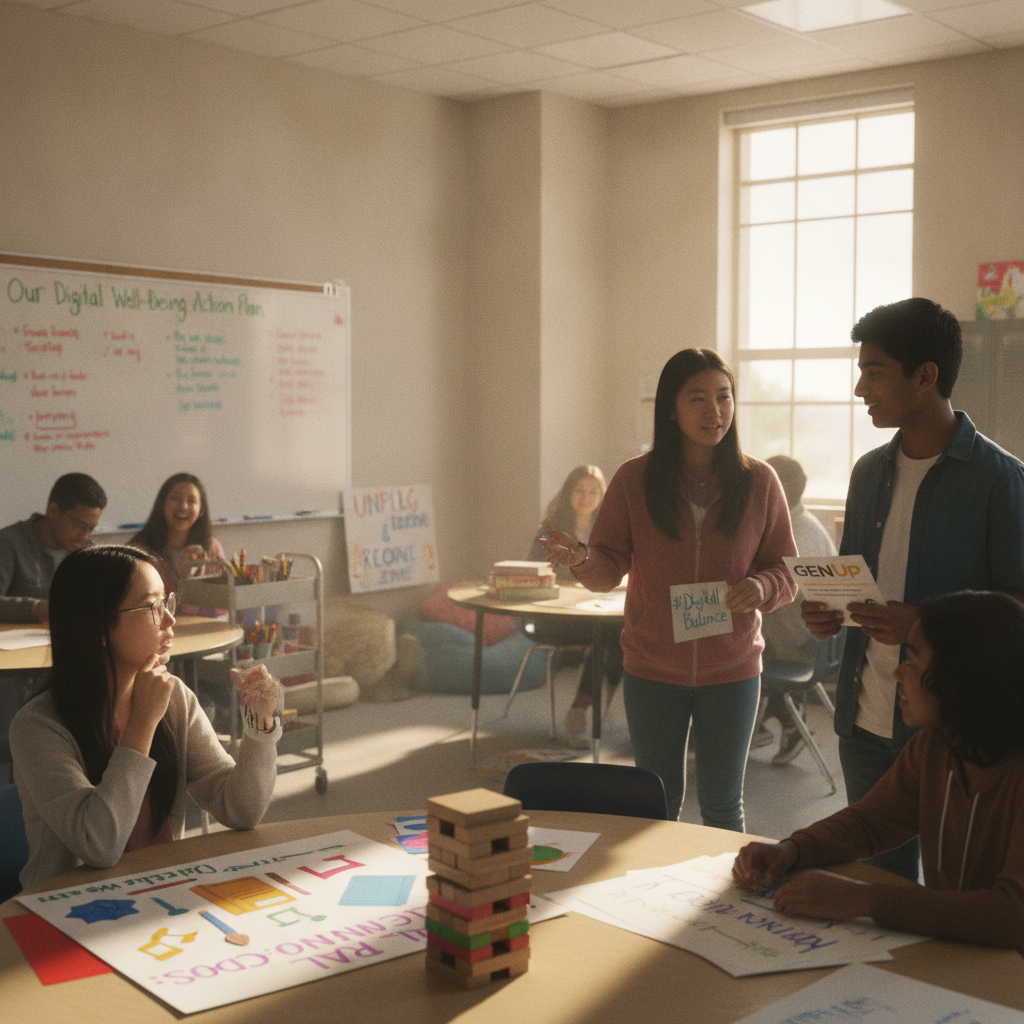
Across the U.S., schools in at least 39 states and Washington D.C. are implementing smartphone bans, forcing students to confront tech-free classrooms. While many students support these screen-time restrictions, they often feel excluded from policy-making and argue that bans alone don't address underlying issues like social pressure and isolation. In response, a growing movement of students is advocating for their own digital well-being. Organizations like GENUp are pushing for mandatory digital wellness education, teaching students about the mental health impacts of social media and AI. Students like Elise Choi and Vihaan Bhardwaj emphasize that the harm of excessive screen time extends beyond the classroom, affecting sleep, focus, and self-esteem. Other students, such as Liv Kong, are actively shaping school phone policies through student advisory groups and pilot programs, ensuring student input. Initiatives like #HalfTheStory's Teen Tech Council provide mini-grants for students to launch tech-free activities, from 'crafts carts' to 'Wellness Day' events, fostering 'real-world connections.' Olivia Howard and her peers are even developing 'detox rooms' and promoting more in-person classroom interactions. These student-led efforts aim to create supportive, not just punitive, environments, empowering the first generation to grow up with pervasive technology to thrive without constant digital distraction.