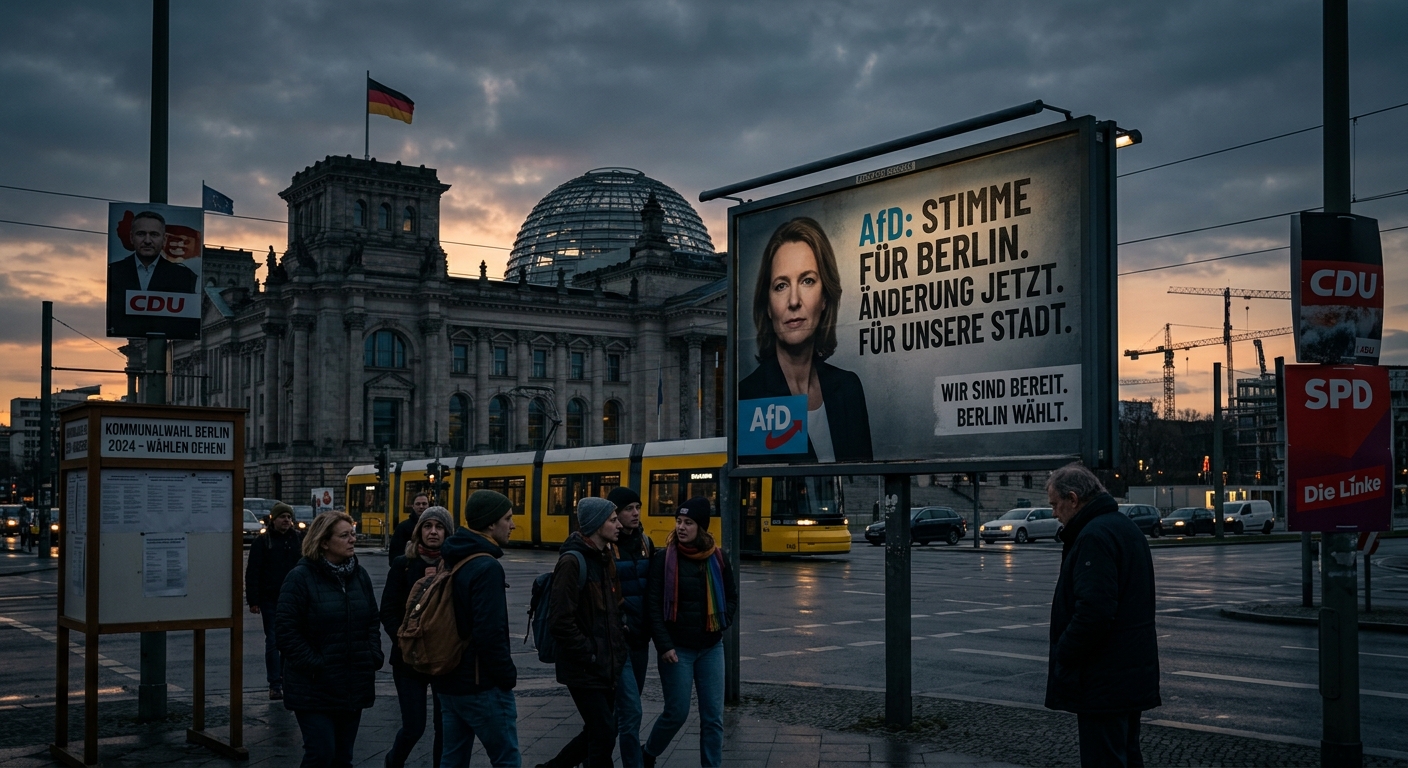
Germany's far-right AfD party is surging, threatening to capture Berlin in upcoming elections, a move that could shake national politics and mark a significant shift in one of Europe's most liberal cities.
Germany's far-right Alternativ fur Deutschland (AfD) party is experiencing a significant surge across the country, now setting its sights on Berlin, one of the world's most liberal cities, as voters prepare to go to the polls. Following a recent success in state elections in Saxony-Anhalt, the AfD is working to refine its brand, despite being classified as a right-wing extremist organization by German intelligence. Current polling places the AfD dramatically closer to the leading parties than three years ago, now just 3.4% behind The Left and 2.5% behind Chancellor Friedrich Merz’s CDU. A victory in Berlin would be a 'country-wide earthquake,' marking the second far-right state election success since World War II and the second in two weeks. Experts note the AfD's campaigning style has become 'less toxic,' with leaders adopting a softer public perception, like Berlin's AfD leader Kristen Brinker. While migration ('remigration') and opposition to anti-discrimination and gender equality programs remain core tenets, the party is also focusing on local urban problems such as housing, rent, and education to broaden its appeal. The AfD is effectively siphoning voters from various segments, including disillusioned CDU voters (angered by Merz's circumvention of the debt brake and past refugee policies), young undecided voters (reached through social media), economically left-wing but socially right-wing individuals, and long-standing neo-Nazi supporters. However, Berlin presents unique challenges for the AfD. Its CDU electorate is less right-wing, and the 'firewall' — an unwritten agreement among opposition parties to exclude the far-right from power — is expected to hold strong. Additionally, young people in Berlin tend to lean left, as evidenced by a recent under-16s election. Despite this, Berlin is a relatively poor city, and its eastern parts (formerly the GDR) are AfD strongholds, aligning with a broader European pattern where fatigue with mainstream politics leads even urban electorates to consider radical right-wing change.